
Pleasure Belongs at the Table, Too
Somewhere along the way, eating became a very serious business.
We learned to count things, measure things, replace things, and ask whether we’d been “good” before deciding what to order.
But ask yourself what you actually enjoy eating, and suddenly it feels like a trick question.
“Do you mean what I want, or what I’m supposed to say?”
What you want, friend. This is lunch. Nobody is checking your answers against a wellness influencer’s grocery haul.
As we continue this month’s conversation about moving from food rules to self-trust, let’s make room for something that often gets treated like an optional extra: enjoying your food.
Because nourishment, pleasure, culture, and connection can all have a place at the table.
Food Can Serve More Than One Purpose
Food provides nourishment. It can also be the soup your grandmother made, the birthday cake your daughter requests every year, or the dinner you share with a friend when you finally get your calendars to cooperate.
Sometimes a meal is practical: you’re hungry, you have twenty minutes, and there are leftovers.
Sometimes it’s an experience: you’ve been looking forward to that restaurant all week.
Sometimes it’s a familiar taste that makes a new place feel a little more like home.
You don’t have to pick one acceptable reason for eating and defend it for the rest of your life.
Caring about nutrition can exist alongside caring about taste, tradition, and the people sitting beside you.
Enjoyment Doesn’t Need a Nutrition Alibi
Have you ever described a food you love and immediately added a defense?
“It’s chocolate, but it has antioxidants.”
“It’s pasta, but I worked out today.”
“It’s homemade, so it’s probably okay.”
Ma’am. The brownie did not ask you to prepare a closing argument.
You can appreciate a food’s nutritional value. You can also enjoy it because it tastes good.
That doesn’t mean every meal has to be your favorite meal, or that health needs disappear. It means pleasure gets a voice in the conversation, too.
Instead of asking only, “What should I eat?” you might also ask:
What sounds appealing?
What would help this meal feel satisfying?
What works for my body and my needs today?
What do I have the time, energy, and resources to make?
Those questions leave room for real life. And real life occasionally involves eating scrambled eggs for dinner because you are finished making decisions.
Culture and Connection Belong Here
Recipes can carry stories.
A familiar seasoning. A holiday dish. The way someone taught you to cook without measuring a single thing.
“Just add enough.”
Enough what, Grandma? We have questions.
When we judge food only by numbers or labels, we can overlook what those foods mean to us. A family dish doesn’t need to be “cleaned up” to deserve a place in our lives.
You can appreciate your traditions and adapt them when you need to. You can try something new without rejecting where you came from.
And connection doesn’t require a picture-perfect dinner party. It might look like takeout with your partner, lunch with a coworker, or sitting down long enough to enjoy your own company.
The meal doesn’t have to be impressive to mean something.
You Can Respect Your Body and Enjoy Your Food
Making room for pleasure includes respecting what helps you feel well.
If you have celiac disease, a food allergy, or another medical dietary need, those needs still matter. You deserve enjoyable options that work for you.
As someone with celiac disease, I’m looking for food that’s safe and worth getting excited about. “Well, technically you can eat it” is a rather uninspiring restaurant review.
You’re also allowed to discover that a food sounds better than it tastes. Or that you want something different halfway through. Or that a familiar favorite is exactly what you hoped it would be.
Self-trust leaves room to notice and respond. You don’t have to predict every choice perfectly.
What If You Eat More Than You Planned?
This is where an old rule may try to pull up a chair.
“See? This is why you can’t let yourself enjoy things.”
But eating more than you intended doesn’t turn pleasure into a mistake.
In last week’s post, “What to Do After You Eat More Than You Planned,” we talked about the urge to skip meals, compensate with exercise, or declare the day ruined.
That conversation belongs here, too. You can enjoy a meal and still meet yourself with care afterward. You don’t need to turn tomorrow into a repayment plan.
You can get curious about the experience without putting yourself on trial.
Try Inviting Enjoyment Into One Meal
You don’t need to overhaul your relationship with food by Thursday.
At one meal this week, ask:
“What would make this a little more enjoyable?”
Maybe it’s adding a sauce you love. Seasoning the vegetables the way you actually like them. Choosing the sandwich you wanted. Sitting outside. Calling someone to join you.
Or simply giving yourself a few moments to taste your food without reviewing your performance.
There’s no requirement to eat slowly enough, mindfully enough, or joyfully enough. We are not creating an advanced placement course in lunch.
You’re practicing giving your preferences some space.
A Place for Pleasure
You’re allowed to care about your health and look forward to dinner.
You’re allowed to enjoy a family recipe without calculating how to make up for it.
You’re allowed to want food that nourishes you, tastes good, and connects you to your life.
Pleasure belongs at the table, too. You don’t have to wait until you’ve followed every food rule to pull up a chair.
What’s one food or meal you love for the taste, the memories, or the people you share it with? Tell me in the comments—I’d love to hear the story.
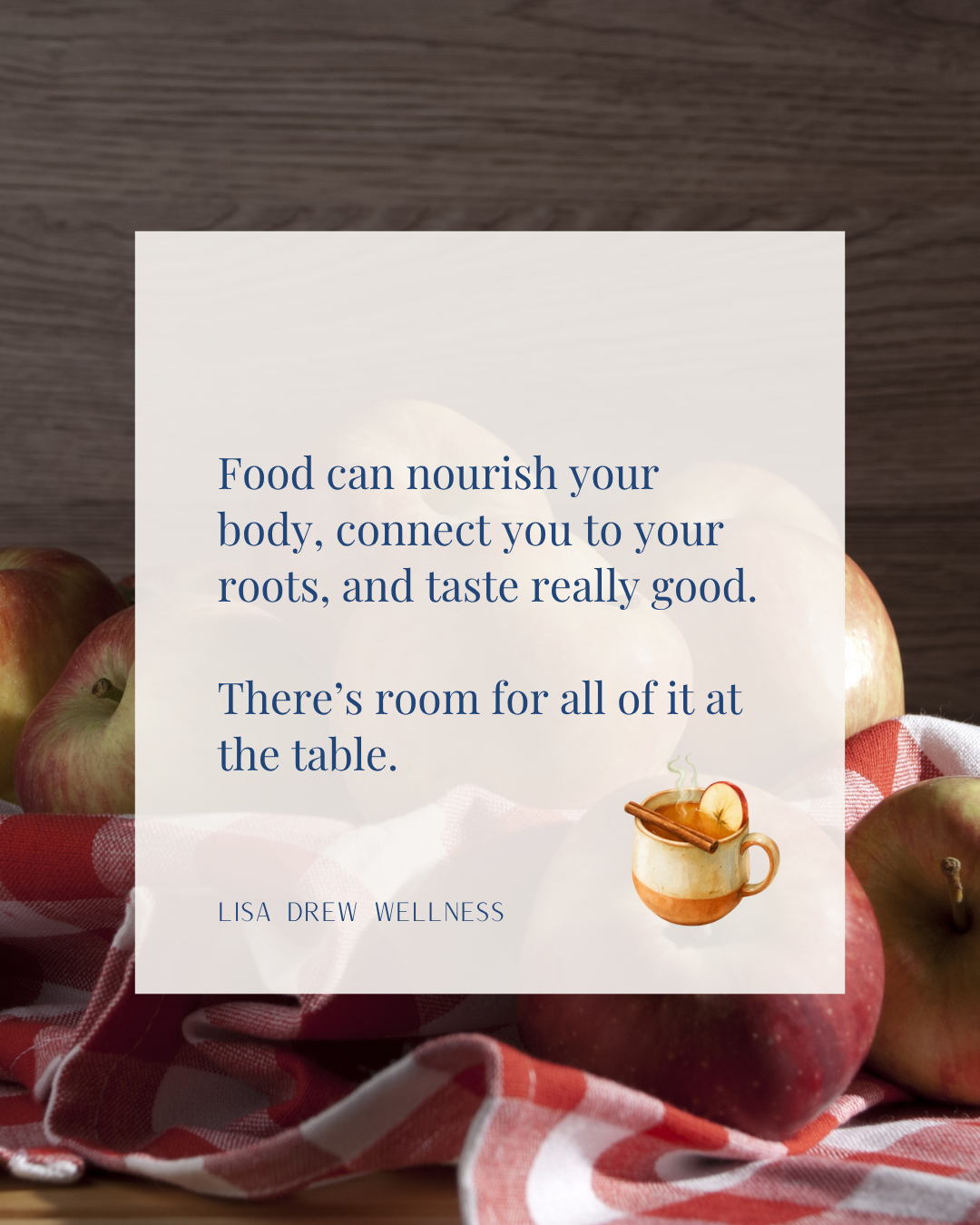
Affirmation: I can care about my health and enjoy my food—at the same table.