It’s easy to imagine trusting yourself around food when life is cooperating.
You’ve bought groceries. There’s time to make lunch. You’re sitting down to eat something you actually wanted.
Lovely. We support this version of events.
But what about the day your appointment runs late, you forgot your snack, and dinner is whatever you can assemble without another trip to the store?
Or the birthday party where you want cake, even though you’re comfortably full?
Or the lunch you thought would be enough that leaves you hungry an hour later?
Food self-trust has to have room for those days, too.
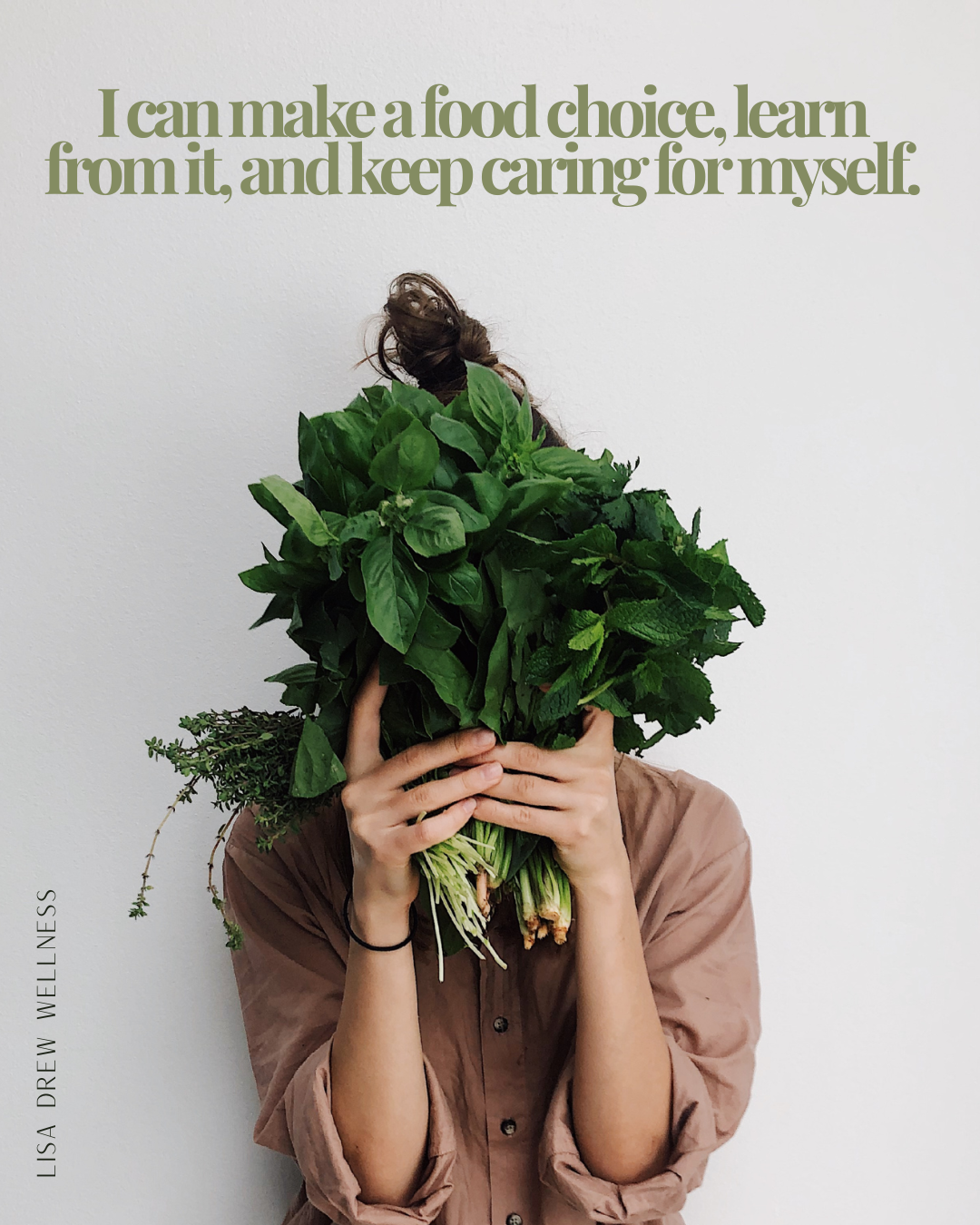
Because trusting yourself around food doesn’t mean every choice goes beautifully. It means you can notice what you need, make a decision, and respond with care—even when the result surprises you.
Let’s talk about what that actually looks like.
What Is Food Self-Trust?
Food self-trust means giving your needs, preferences, experiences, and circumstances a voice in how you eat.
That might include hunger and fullness. It can also include satisfaction, convenience, your budget, your schedule, and any medical dietary needs.
You don’t have to receive a crystal-clear message from your stomach before you’re allowed to make lunch.
Sometimes the useful information is simply: “I’m leaving the house for four hours. Eating something now would help.”
Self-trust gives you room to use that information without turning the decision into another test you can fail.
On Busy Days: Let Practical Be Enough
You planned to make a lovely lunch.
Then work ran over, someone needed something, and suddenly your lovely lunch is still a collection of ingredients in the refrigerator.
Food self-trust might sound like:
“I need to eat. What’s available that will work for me?”
Maybe that’s leftovers, a frozen meal, takeout, or a sandwich with something easy on the side.
You can choose convenience and still care about yourself. There is no additional wellness credit for washing three pans.
You might also pack a snack before a busy afternoon, even if you aren’t hungry yet. You know your schedule. You know how you tend to feel when lunch gets delayed.
Planning ahead can be an act of listening to yourself.
At Celebrations: You Can Decide What You Want
You’re at a birthday dinner. The food is good, the conversation is better, and here comes the cake.
You’re allowed to want some.
You’re also allowed to pass, share a slice, save some for later, or discover halfway through that you’ve had enough.
None of those choices needs to become your official position on cake for the rest of your life.
In last week’s post, “Pleasure Belongs at the Table, Too,” we explored how enjoyment, culture, and connection have a place in eating. Celebrations give us a very real opportunity to practice that.
You might ask:
“Would I enjoy this? How am I feeling? What sounds comfortable for me?”
Then you get to make your choice without spending the rest of the evening defending it to yourself.
[Add the link to the October 20 post, “Pleasure Belongs at the Table, Too,” above.]
When Your Appetite Changes: You Can Adjust
Yesterday’s breakfast kept you satisfied until lunch.
Today, the same breakfast barely got you through your first meeting.
That doesn’t mean you’ve become mysteriously bad at breakfast.
You’re allowed to eat more.
You’re also allowed to notice that you want something different today: a more substantial meal, an extra snack, a different texture, or a food you didn’t want yesterday.
Food self-trust might sound like:
“That usually works for me, but today I need something else.”
And when hunger cues feel quiet or confusing, you can use practical support: regular opportunities to eat, familiar meals, or guidance from a qualified professional.
You don’t have to wait until you feel shaky, distracted, or ravenous to take your needs seriously.
When a Choice Doesn’t Go to Plan: Stay on Your Own Side
Maybe you ate past comfortable fullness.
Maybe you waited too long to eat and arrived at dinner ready to consume the menu, including its protective plastic cover.
Maybe you chose something that sounded delicious and discovered it wasn’t satisfying at all.
Here’s where self-trust can feel especially unfamiliar.
The old response might be: “See? I can’t trust myself.”
Try giving yourself a little more room:
“Well, that didn’t feel great. What would help now?”
That could mean getting comfortable, loosening a tight waistband, or allowing some time for the fullness to settle. As the day continues, you can return to your usual eating routine and respond to your needs without turning the next meal into repayment.
Later, if it feels useful, get curious:
Did I need an earlier opportunity to eat?
Was the meal satisfying?
Was I distracted or rushed?
Was I trying to follow a rule that didn’t fit the situation?
You may learn something helpful. You may simply have had an uncomfortable meal.
One experience doesn’t cancel your ability to care for yourself.
Self-Trust Can Include Boundaries Around Food
Having celiac disease, a food allergy, or another medical dietary need doesn’t exclude you from food freedom.
You can check ingredients, ask about preparation, and choose foods that are safe for you while working toward a calmer relationship with eating.
You can also dislike a food without needing to “challenge” yourself to enjoy it.
If you don’t like kale, you do not have to schedule a reconciliation.
Self-trust includes respecting what you know about your body and getting support when you need more information.
Try One Small Moment of Trust
You don’t need to overhaul how you eat this week.
Choose one moment to practice.
Eat before the long appointment. Add something to a lunch that usually leaves you hungry. Order the meal you actually want, with your needs in mind. Let an unexpected eating experience end without an evening of self-criticism.
You could start with this question:
“Given the day I’m actually having, what would help me feel fed, satisfied, and cared for?”
Some days, you’ll know immediately. Other days, you’ll make your best guess and learn something.
That counts, too.
You’re building a relationship with yourself that can handle a busy Tuesday, a birthday dinner, a changing appetite, and the occasional “well, that didn’t go as planned.”
There’s room for you in all of those moments.
Which situation makes food self-trust hardest for you: busy days, celebrations, changing hunger, or a choice you second-guess afterward? Share in the comments.