
What to Do After You Eat More Than You Planned
You went back for seconds. Dinner turned into dinner and dessert. Or you were standing in the kitchen eating crackers while deciding what to eat, and apparently the crackers became the appetizer committee.
Now you’re fuller than you expected, and that familiar voice starts up:
“Well, I blew it.”
“I’ll skip breakfast tomorrow.”
“I need to work this off.”
Before your brain schedules a punishment workout and cancels your next meal, let’s pause.
Eating more than you planned doesn’t mean you failed. It means you ate more than you planned.
You can decide what happens next without putting yourself on trial.
Last week, in Where Did Your Food Rules Come From?, we talked about questioning the rules we’ve collected over the years. This week, we’re taking that conversation into real life—when things don’t go according to plan and the old rules suddenly have plenty to say.
First, separate what happened from what you’re telling yourself
There’s a difference between:
“I ate past comfortable fullness.”
And:
“I have no self-control, and now the whole day is ruined.”
The first describes an experience. The second turns dinner into a character assessment.
Maybe you were distracted. Maybe lunch was rushed. Maybe the food tasted wonderful, and you wanted more. Maybe you noticed fullness later than you expected.
You don’t have to love the uncomfortable feeling. But you can respond to it without making yourself the problem.
Try this:
“I’m feeling fuller than I’d like. What would help me feel comfortable right now?”
Looser clothes? Sitting comfortably? Giving yourself a little time?
Start there. The courtroom can close for the evening.
Resist the urge to skip your next meal
Skipping breakfast to “make up for” dinner can feel like the logical next move when you’ve spent years following food rules.
But your next meal doesn’t need to become a penalty.
Return to your usual meals and snacks, allowing for how you feel. If you’re still physically uncomfortable when you would normally eat, give yourself some flexibility rather than creating a rule that you’re forbidden to eat.
There’s a difference between adjusting for comfort and deciding you don’t deserve food.
When hunger shows up again, you’re allowed to respond—even if you ate more earlier.
You don’t need to spend tomorrow proving that today didn’t happen.
Let movement be a choice, not repayment
If a gentle stroll sounds pleasant, you can take one. If you’d rather sit down in comfortable pants, that’s an option, too.
What deserves your attention is the thought behind the movement:
“Some fresh air would feel good.”
Or:
“I have to burn off what I ate.”
Same walking shoes. Very different conversation with yourself.
You can keep your usual movement routine without adding extra exercise as punishment. Food doesn’t create a debt that your body has to repay.
And dessert does not come with an invoice from the treadmill.
Don’t declare the day ruined
The “I already messed up, so what’s the point?” thought can be surprisingly convincing.
Suddenly, one meal becomes a reason to abandon everything else that helps you feel good.
But you can still drink something when you’re thirsty. Take your usual evening wind-down. Go to bed. Eat breakfast. Carry on with your life.
You don’t need a Monday, a new month, or a ceremonial removal of every snack in the house.
Your next choice can be an ordinary act of care.
Nothing dramatic required.
Get curious when you’re ready
Once the immediate discomfort or frustration has settled, you might notice something useful.
Ask yourself gently:
Had I eaten enough earlier in the day?
Did I arrive at the meal especially hungry?
Was I distracted, rushed, or barely tasting my food?
Did I feel pressure to eat it all because it would be “off-limits” tomorrow?
Was I looking for comfort, connection, or a break?
Did I simply enjoy the food and choose to have more?
These questions are invitations to understand your experience. You don’t need to interrogate yourself under a fluorescent kitchen light.
Sometimes you’ll notice a practical adjustment: a more substantial lunch, a snack before a late dinner, or a little more time to enjoy your meal.
Sometimes the answer will be, “It was delicious, and I had more than felt comfortable.”
That can be the whole answer.
What returning to your usual routine can look like
Let’s say you finish dinner feeling overly full.
You change into something comfortable. You notice the urge to plan tomorrow’s restriction, but you leave breakfast on the schedule. You keep your usual movement plans. Later, you consider whether skipping lunch played a part.
That’s it.
No detox. No punishment workout. No announcement that you’re “starting over.”
This is a real-life practice of food freedom: meeting an imperfect moment with enough kindness to keep taking care of yourself.
You might still hear the old thoughts. You don’t have to follow every instruction they give you.
You’re allowed to keep going
Building self-trust doesn’t mean you’ll always stop at exactly the right bite or make every food choice feel effortless.
It means you can learn from an experience without using it against yourself.
The next time you eat more than you planned, try asking:
“What would taking care of myself look like now?”
Maybe it looks like rest. Maybe it looks like eating regularly tomorrow. Maybe it looks like letting one meal stay one meal.
You deserve that care in this moment, too.
Want to keep exploring the rules behind these reactions? Read my previous post, Where Did Your Food Rules Come From?, and notice which rule gets loudest when you eat more than you intended.
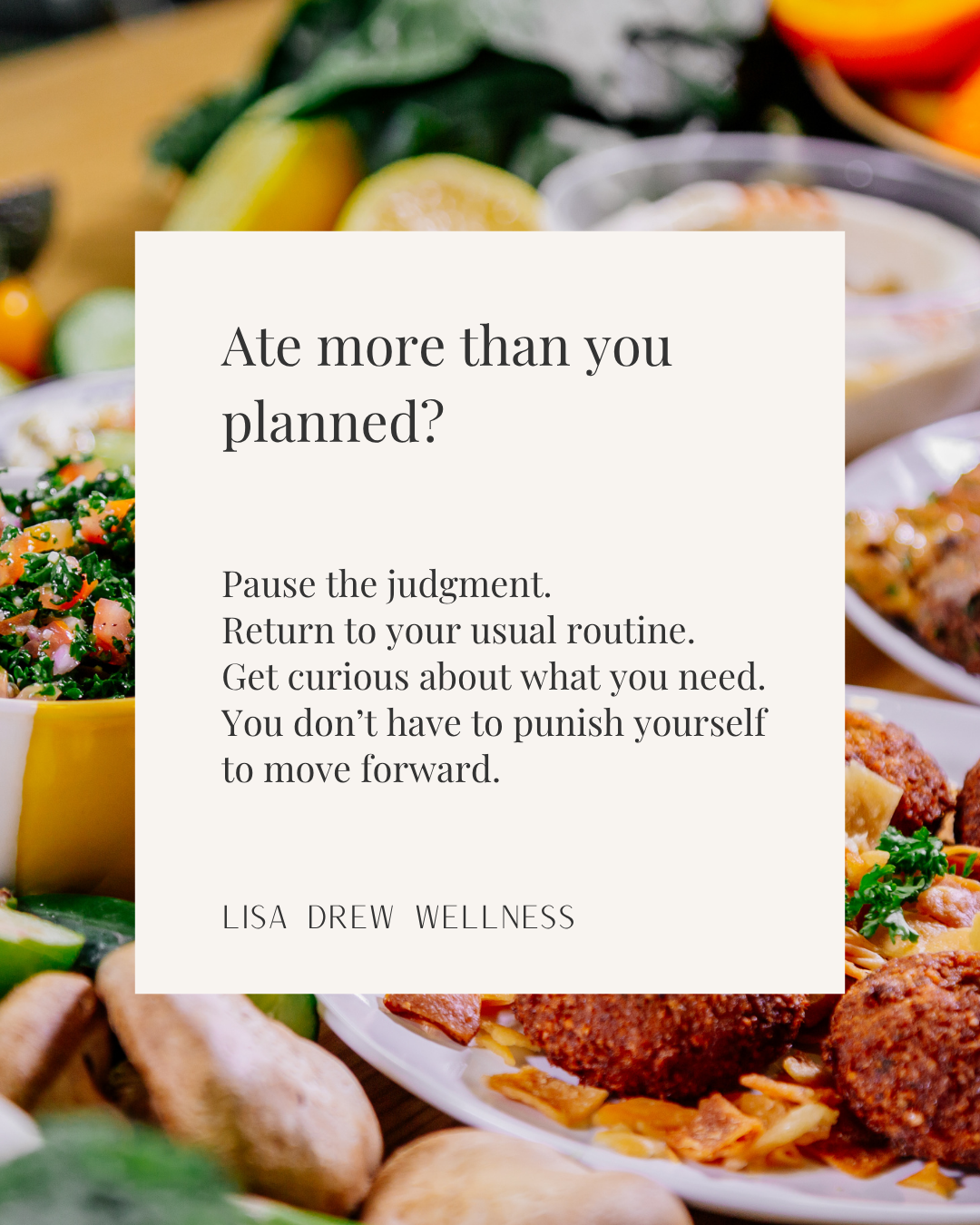
Affirmation: I can eat more than I planned and still treat myself with care.