Your wellness routine has met November.
November brought shorter days, extra commitments, and a calendar that apparently accepted invitations on your behalf.
That walk you enjoyed after dinner? It’s dark now. The meal you planned to cook? You’re getting home later than expected. Your quiet evening? Someone needs something, and somehow you’re the designated something department.
It’s easy to look at all this and think, I need to get back on track.
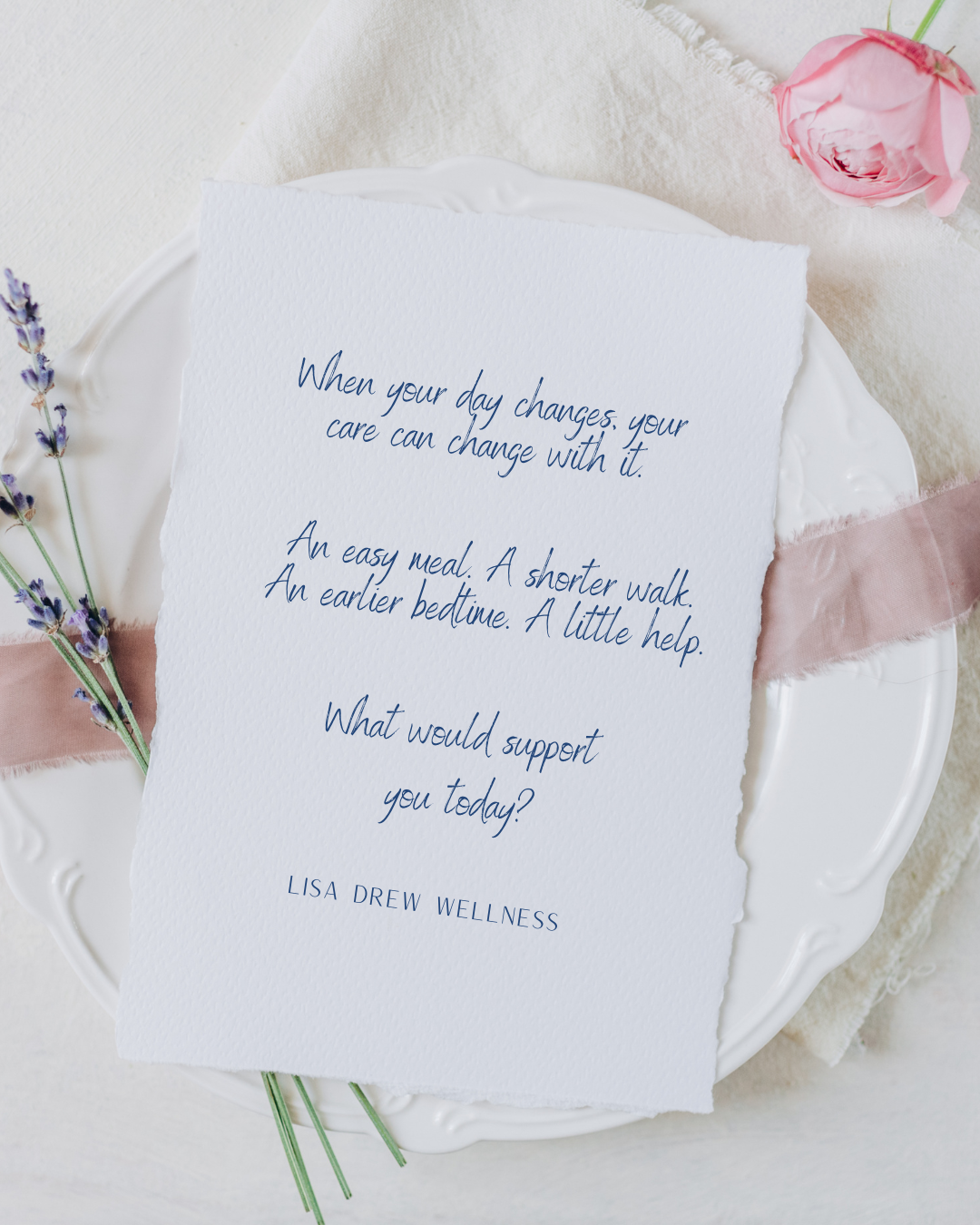
But your day has changed. It makes sense that the way you care for yourself might need to change, too.
Last week, in “How to Make Room for Yourself When Everyone Needs Something,” we talked about putting your needs on the list.
This week, let’s talk about what happens next: making room for those needs when the list meets actual life.
Start with the need underneath the routine
Sometimes we get so attached to how a habit is supposed to look that we lose sight of what it does for us.
Maybe your evening walk gives you movement, fresh air, and a little time when nobody is asking where the scissors are.
If an hour outside no longer fits, those needs still matter. You can look for another way to respond to them.
Ask yourself:
“What was this routine helping me with, and what could help today?”
You might need food. A pause. Some company. A little movement. A chance to go to bed before you’re falling asleep on the couch with your phone in your hand.
Once you name the need, you have more options.
Let a convenient meal count as a meal
Some evenings, cooking sounds lovely.
Other evenings, chopping an onion feels like an unreasonable request.
Keep a few meals available that require very little time or decision-making. Depending on your preferences and dietary needs, that might look like:
Microwave rice, canned beans, frozen vegetables, and a sauce you enjoy.
Eggs, toast, and fruit.
A ready-made soup with crackers or a sandwich.
Leftovers assembled into whatever combination sounds good.
Choose foods that work for your allergies and medical needs. Convenience can still fit within those boundaries.
You’re allowed to use the frozen vegetables. You’re allowed to repeat yesterday’s lunch. You’re allowed to buy something already prepared.
Feeding yourself deserves a place in your day even when cooking doesn’t fit.
If lunch keeps disappearing between appointments, the useful adjustment might be putting something ready to eat in the fridge where you’ll actually see it.
Give your walk a shorter version
A shorter walk can be worth taking.
Around the block. To the end of the street. Ten minutes before your next call.
You don’t have to wait until you have enough time for your usual route.
If walking doesn’t work for your body or your day, you might stretch, move gently in your chair, or step outside for a few minutes of fresh air.
And sometimes you need rest. You can respond to that, too.
Try deciding on a shorter option ahead of time:
“On busy days, I can take a quick walk at lunch.”
That gives you somewhere to start without having to renegotiate your entire routine at 5:30 p.m.
Make an earlier bedtime easier to choose
There’s a particular kind of tired where you desperately want to go to bed but continue scrolling because this is the first time nobody has needed you.
Understandable. The quiet finally arrived, and you’d like to enjoy some of it.
If you want an earlier bedtime, look at what keeps pushing it later.
Could one evening task wait? Could someone else handle the kitchen? Could you get ready for bed before you sit down, so standing up again doesn’t become an Olympic event?
You might start by making room for a little downtime earlier in the evening.
You deserve a chance to enjoy yourself and a chance to rest. It’s worth considering how your evening could hold both.
Ask for help before you reach your limit
When the calendar gets fuller, it’s easy to quietly absorb the extra work.
Then caring for yourself becomes one more thing you’re supposed to squeeze in after everything else is handled.
This is a good moment to ask: “What needs to come off my plate, and who could help?”
Make the request specific:
“Can you handle dinner on Wednesday?”
“Could you pick that up while you’re out?”
“I need twenty minutes to myself. Can you take over?”
“I can bring one dish. Which would be most helpful?”
Other people may need a clear request before they understand what you need.
You can ask while you still have some energy left.
Plan for the day you’re likely to have
If Tuesdays are consistently packed, it may be time to stop assigning Tuesday an elaborate dinner and a lengthy workout.
Tuesday has shown you who she is.
Give that day a plan that fits: an easy meal, a manageable amount of movement, and fewer evening tasks.
Look at the week ahead and ask:
“Where am I expecting more from myself than this day realistically allows?”
Then adjust one thing.
You don’t need to redesign your whole life this afternoon. That would be quite an addition to the list.
Choose one way to make this week easier
Caring for yourself when your routine changes takes a little curiosity.
What still fits? What needs adjusting? Where could you use support?
Maybe this week you stock two convenient meals. Maybe you take a shorter walk. Maybe you ask someone to handle one task so you can get to bed.
Let that choice respond to something you actually need.
Your routine can change with your life. Your needs still deserve room in it.
What could you make easier this week?
For more conversations about making room for yourself, food freedom, and everyday well-being, join my Monday Motivation + Wellness Wednesday email list. Come as you are—an unfinished to-do list is practically the dress code.
With care,
Lisa
PS: Need a wellness plan that can bend with real life? Explore the Heal & Thrive Method™ 21-Day Journey—available for $149 through December 31.